

Crepe ranks among the most popular fabrics used in modern bridal gowns, especially in minimalist and figure-skimming silhouettes.
Clean structure, elegant drape, and sculpted lines give gowns a refined look that photographs beautifully and enhances natural body shape.
- Stretch
- Non-stretch
Fabric choice influences comfort, fit, structure, and the overall character of the gown.
Some dresses rely on flexibility that follows body movement, while others rely on structure that holds a defined silhouette.
Why Crepe is Popular for Wedding Dresses
Crepe fabric gained strong popularity in modern bridal fashion due to its ability to support minimalist design while maintaining elegance.
View this post on Instagram
Modern Minimalist Aesthetic
Minimalist bridal fashion relies on fabrics that create clean silhouettes without excessive decoration. It performs especially well in such designs because textured surface adds visual interest while maintaining a smooth and refined look.
- Clean seams and simple lines
- Limited embellishment
- Sculpted silhouettes that focus on shape
Modern bridal fashion often includes many fabric choices, each creating a different visual effect. Crepe gowns focus on sleek silhouettes and clean structure, while a tulle wedding dress often features layered skirts that create airy volume and dramatic movement.
Figure-Enhancing Fit

Careful tailoring allows gowns to follow body contours with precision. Natural drape helps fabric glide smoothly across the torso, waist, and hips. Fabric structure supports curves without heavy internal support.
- Fabric falls smoothly across the body
- Texture disguises minor surface wrinkles
- Material conforms gently to natural curves
Such properties allow designers to produce flattering gowns that remain comfortable throughout long wedding celebrations.
Beautiful Drape and Movement
Graceful drape represents one of the fabric’s most recognizable qualities. Fabric responds naturally to movement, creating flowing lines along skirts and trains.
Movement becomes especially visible during walking, dancing, and photography. Fluid drape creates soft folds that shift naturally with motion.
- Smooth cascading folds along the skirt
- Gentle fabric motion during walking
- Elegant fabric flow in wedding photography
Such characteristics contribute to the refined appearance often associated with crepe gowns.
Versatility in Dress Styles
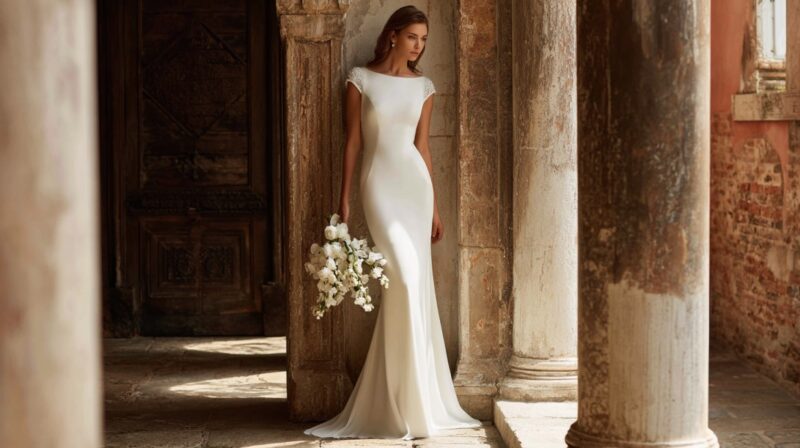
Crepe supports many bridal silhouettes due to its adaptable weight and draping ability. Designers can shape it into sleek modern gowns or softly structured dresses.
- Sheath gowns
- Fit-and-flare dresses
- Mermaid silhouettes
- Minimalist A-line gowns
Additional design elements often complement crepe construction. Lace overlays, sheer sleeves, and structured bodices can be paired to produce varied bridal aesthetics.
What are the Commonest Types of this Fabric?
Crepe fabrics appear in several variations depending on fiber composition and weaving methods. Different types produce varied textures, weights, and drape qualities suitable for different garments.
| Fabric Type | Description | Key Characteristics | Common Use in Bridal Gowns |
|---|---|---|---|
| Silk Crepe | Silk crepe ranks among the most luxurious versions of crepe fabric. Natural silk fibers create a soft texture and fluid drape that moves gracefully with the body. |
|
High-end bridal gowns and refined designs with clean, elegant lines. |
| Crepe Georgette | Crepe georgette offers lightweight construction and slight transparency. Its texture is grainy but softer and airier than heavier crepe fabrics. |
|
Flowing gowns, layered skirts, and delicate sleeves requiring graceful motion. |
| Crepe-Back Satin | Crepe-back satin features two different fabric surfaces within the same material—one with crepe texture and the other with a smooth satin finish. |
|
Minimalist bridal gowns or structured eveningwear depending on the chosen surface. |
| Stretch Crepe | Stretch crepe includes elastic fibers such as elastane or spandex, allowing the fabric to expand and return to its original shape. |
|
Modern fitted gowns and body-contouring bridal silhouettes. |
| Japanese Crepe | Japanese crepe features a delicate texture and lightweight structure that drapes softly and produces fluid movement. |
|
Elegant gowns emphasizing graceful movement and understated sophistication. |
What Is Stretch Crepe?

Stretch crepe refers to crepe fabric containing elastic fibers such as elastane or spandex. Elastic content allows the material to expand with body movement and return to its original shape.
Key Characteristics
Stretch crepe provides several defining properties that distinguish it from traditional fabrics.
- Elastic and flexible structure
- Body-contouring fit
- Smooth modern surface appearance
- Comfort during extended wear
Flexibility allows the fabric to move easily with the body. Fabric stretches slightly when the wearer sits, walks, or dances, then returns to its original shape.
Smooth surface appearance also contributes to the sleek aesthetic favored in minimalist bridal fashion.
Benefits of Wedding Dresses
Stretch crepe offers many advantages for brides seeking both comfort and elegance.
Figure-hugging silhouettes represent one of the most common benefits. Elastic structure allows fabric to follow natural curves while maintaining smooth lines across the gown.
Ease of movement provides another important benefit. Brides can move comfortably throughout long ceremonies and receptions without feeling restricted.
- Flexible fabric that adapts to movement
- Comfortable fit across the hips and waist
- Reduced need for complex internal structure
Flattering fit often occurs with minimal tailoring because stretch crepe naturally conforms to body shape.

Common Bridal Styles Using Stretch
Stretch appears frequently in modern bridal silhouettes designed to follow body contours.
- Mermaid gowns
- Fit-and-flare dresses
- Minimalist sheath gowns
- Backless or body-contouring designs
Designers often pair stretch crepe with clean seam lines and minimal decoration. Such design choices create contemporary bridal gowns focused on silhouette and fabric movement.
What Is Non-Stretch Crepe?
Non-stretch refers to traditional crepe fabric produced without elastic fibers. Texture and structure rely entirely on weaving technique and fiber composition.
Fabric maintains the characteristic grain but does not stretch when pulled. Shape and drape depend on garment construction and tailoring.
Traditional fabrics remain widely used in garments requiring structure and precise tailoring.
Key Characteristics
Several structural traits distinguish non-stretch from stretch varieties.
- More structured feel compared with stretch crepe
- Slightly heavier fabric weight
- Ability to maintain strong garment shape
Structured garments often benefit greatly from such properties. Tailoring remains essential because fabric does not adjust automatically to body movement.
Benefits of Wedding Dresses
Non-stretch crepe works especially well in bridal gowns requiring defined silhouettes.
Clean, tailored silhouettes represent a major advantage. Fabric maintains strong vertical lines across the bodice and skirt.
Support for structured bodices also becomes easier because the material provides stability during garment construction.
- Crisp seam definition
- Strong structure across sculpted bodices
- Smooth drape without excessive cling
Reduced cling also allows the fabric to fall smoothly along the body without closely tracing every contour.
Common Bridal Styles Using Non-Stretch Crepe
Many elegant bridal silhouettes rely on non-stretch crepe because the fabric holds shape well.
- Classic column gowns
- Tailored sheath dresses
- Draped minimalist gowns
- Structured bodice designs
Structured crepe gowns often create a refined and timeless bridal aesthetic while maintaining the elegant texture associated with the fabric.
What is Crepe Wedding Dress Fabric?

Crepe fabric refers to a textile known for a distinctive crinkled or grainy surface texture. Texture forms through the use of high-twist yarns during weaving or knitting. Twisted fibers create a slight irregularity across the surface, producing the characteristic appearance.
The term “crepe” comes from the French word “crêpe,” meaning curled or crinkled. Name describes the fabric’s signature texture.
As you know, fabrics appeared in fashion centuries ago. Early Western use included formal clothing and mourning garments, which relied on the fabric’s matte surface and refined structure.
Modern fashion later adopted crepe for eveningwear, tailored garments, and bridal designs.
Key Characteristics of Crepe Fabric
- Textured surface
- Soft drape
- Matte or muted finish
- Durability
- Breathability and comfort
Fibers Used to Produce Crepe
Crepe fabric can be produced using many types of fibers. Fiber choice determines weight, softness, durability, and overall structure.
- Silk
- Polyester
- Cotton
- Wool
- Rayon or synthetic blends
Different fiber combinations create a wide range of crepe fabrics. Some versions feel light and airy, while others feel heavier and structured.
Closing Thoughts
Crepe remains one of the most versatile and elegant fabrics used in bridal fashion.
Textured surface, soft drape, and adaptable structure allow designers to create modern, minimalist gowns that enhance the bride’s silhouette.
Careful selection helps ensure the gown fits beautifully while providing comfort throughout the celebration.
