
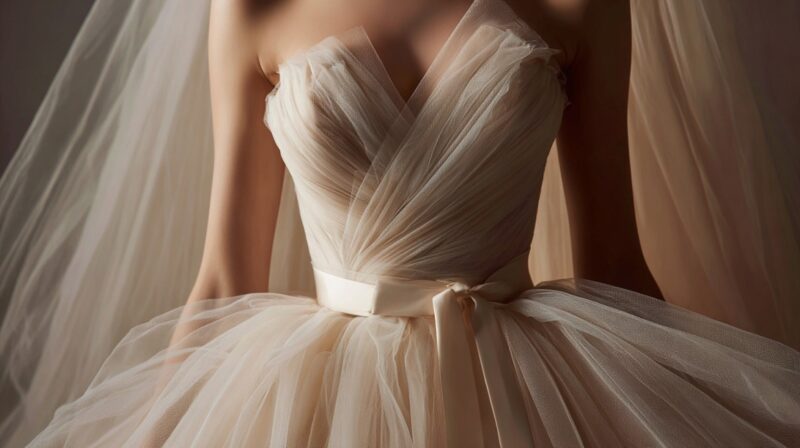
Tulle wedding dress designs remain one of the most recognizable styles in bridal fashion. Soft net fabric creates an airy and romantic appearance that many brides associate with classic wedding aesthetics.
The light structure of the material allows gowns to look voluminous while still feeling comfortable during long ceremonies and receptions.
Layers of tulle give wedding gowns dramatic movement and graceful silhouettes. Designers often use the fabric to build flowing skirts, delicate overlays, and soft details that add dimension to a bridal look.
Versatility makes a tulle wedding dress suitable for many silhouettes. Ball gowns, A-line dresses, and fit-and-flare designs often rely on layered tulle to create shape and volume.
Now, we will talk about the structure of tulle fabric, the main types used in bridal fashion, common tulle wedding dress styles, and factors that help brides select a gown that suits their body shape, wedding theme, and personal style.
How to Choose the Right Type of Tulle Wedding Dress
Selection of a tulle wedding dress involves more than choosing a beautiful design. Fabric structure, silhouette, wedding setting, and comfort all influence how a gown looks and feels during the ceremony and reception.
Careful consideration of these elements helps brides choose a dress that complements their personal style and creates a balanced bridal look.
Several factors guide the selection process. Body shape, wedding theme, fabric construction, comfort, and budget all affect how a tulle wedding dress performs during a wedding celebration.
1. Consider Body Type

Body proportions influence how a gown shapes the bridal silhouette. Different dress structures create different visual effects, which makes silhouette selection an important step when choosing a tulle wedding dress.
- Ball gown silhouettes create dramatic volume with multiple layers of tulle. Full skirts add contrast to the fitted bodice and create a princess-inspired bridal shape.
- A-line dresses offer balanced proportions that complement many body shapes. Gradual flare of the skirt creates an elegant outline without excessive volume.
- Mermaid or fit and flare styles follow the natural curves of the body before expanding near the knees. Structured tulle layers at the bottom create a striking silhouette.
Balanced proportions between bodice and skirt ensure that a tulle wedding dress enhances the natural shape of the bride while maintaining comfort and movement.
2. Match the Wedding Theme
Wedding location and overall theme influence the type of tulle gown that works best. Fabric weight, layering, and decorative details can complement the atmosphere of a ceremony.
- Garden or outdoor ceremonies often suit gowns made with soft or lightweight tulle that moves naturally in open-air environments.
- Formal ballroom celebrations often feature dramatic, layered ball gowns with structured tulle skirts.
- Vintage-inspired weddings frequently combine tulle with lace appliqués, embroidery, or delicate beadwork.
Harmony between gown design and wedding setting creates a cohesive visual presentation during the ceremony and reception.

3. Think About Fabric Structure
Fabric structure strongly affects the silhouette and movement of a tulle wedding dress. Different tulle types create varying levels of softness, support, and volume.
- Stiffer tulle builds strong shape and volume for dramatic skirts.
- Soft tulle creates flowing layers with gentle movement.
- Structured net fabrics provide additional support for gowns that require architectural shapes.
The choice of fabric structure determines how the skirt moves during walking, dancing, and photography sessions.

4. Consider Comfort and Breathability
Comfort remains an important factor during a wedding day that may last several hours. Breathable fabrics and balanced layering help brides feel comfortable during ceremonies, receptions, and photo sessions.
- Silk tulle offers a softer texture and improved breathability.
- Soft synthetic tulle creates lightweight movement without excessive stiffness.
- ayers increase structure but may retain more heat.
Balanced layering allows a tulle wedding dress to maintain visual volume while remaining comfortable for extended wear.

5. Budget Considerations
Fabric type, embellishments, and gown construction influence the price of a wedding dress. Knowledge of material differences allows brides to select a design that fits their financial plans while maintaining their desired style.
- Silk tulle gowns usually cost more due to premium natural fibers.
- Nylon or polyester tulle dresses often offer a more accessible price range.
- Hand-applied embellishments such as lace appliqués or beadwork increase overall cost.
Bridal boutiques frequently offer customization options that allow adjustments in fabric type, decorative details, or skirt layers in order to align design preferences with budget goals.
Different Types of Tulle Used in Wedding Dresses
Fabric selection plays a major role in how a tulle wedding dress looks, moves, and holds its shape. Various forms of tulle differ in softness, structure, transparency, and overall refinement.
Designers choose specific types of tulle in order to achieve a particular silhouette or decorative effect within a bridal gown.
Several tulle varieties appear frequently in bridal collections, each offering distinct characteristics that influence the structure and appearance of a wedding dress.
Classic or Bridal Tulle
View this post on Instagram
Classic bridal tulle appears in many traditional wedding dresses and remains one of the most commonly used forms of the fabric.
Nylon or polyester fibers typically create the mesh structure of this material. Lightweight construction allows the fabric to build volume without adding excessive weight to the gown.
The texture of classic bridal tulle feels slightly crisp, which helps the material hold its shape when layered in skirts. Structured quality makes it well suited for dramatic silhouettes that require fullness and stability.
Designers often rely on classic bridal tulle for gowns that require several skirt layers. Full skirts created with this material can maintain dramatic volume while remaining relatively light and comfortable during a wedding ceremony.
Many princess-inspired bridal gowns use classic bridal tulle because the fabric supports structured ball gown silhouettes and traditional A-line designs.
Soft Tulle
@bespokestitchery Sewing tutorial for soft bridal tulle. What other fabrics would you like to use? #sewingtutorial #dressmaker #customweddingdress #learntosew ♬ original sound – bespokestitchery
Soft tulle offers a more delicate and flexible texture compared with classic bridal tulle. Fibers used in this version of the fabric create a gentle drape that moves naturally with the body.
A flowing structure allows skirts made with soft tulle to move gracefully while walking or dancing. Light and flexible construction also increases comfort, especially during outdoor ceremonies or warmer climates.
Soft tulle frequently appears in romantic bridal styles and bohemian-inspired gowns. Relaxed silhouettes benefit greatly from the natural draping quality of the fabric.
Designers often choose soft tulle for weddings held in garden settings, beach environments, or smaller venues where a relaxed aesthetic complements the atmosphere.
Illusion Tulle
View this post on Instagram
Illusion tulle contains an extremely fine mesh pattern that becomes almost invisible against the skin. Delicate structure allows the fabric to support decorative elements while maintaining a transparent appearance.
Designers frequently use illusion tulle to create illusion necklines, sheer sleeves, and open back designs. Fabric provides structural support without interrupting the visual flow of the dress.
Lace motifs, embroidery, and beadwork often appear on illusion panels. Decorative patterns placed on the transparent surface can create the visual effect of details floating directly on the skin.
Modern bridal designs commonly feature illusion tulle because it allows intricate detailing while preserving a light and elegant appearance.
Silk Tulle
View this post on Instagram
Silk tulle represents a luxury material used in high-end bridal gowns. Natural silk fibers create a softer and more breathable fabric than most synthetic alternatives.
Elegant draping allows silk tulle to fall smoothly along the body while maintaining a graceful layered structure. The natural sheen of silk also adds a subtle glow that enhances the sophistication of a gown.
Comfort plays an important role in the popularity of silk tulle. Breathable fabric feels lighter during long ceremonies and extended celebrations.
Luxury bridal collections frequently rely on silk tulle when creating refined and elegant wedding dresses that prioritize softness and natural movement.
English Net or Structured Tulle
@mckenzie.mckeene English net vs illusion tulle ✨ One of my most asked bridal veil questions! Here’s the difference between these two gorgeous fabrics so you can choose the perfect veil for your wedding day 👰♀️💍 #WeddingVeil #BridalTips #WeddingPlanning #BridalStyle #weddingdress ♬ Lose Control – Missy Elliott ft. Ciara & Fat Man Scoop
English net features a larger mesh pattern and slightly heavier texture than classic tulle. A stronger structure allows designers to construct gowns that require additional support and shape.
Structured net fabrics often appear in dramatic skirt designs or gowns that feature sculpted silhouettes. Firm structure allows the fabric to maintain form during movement.
Formal bridal gowns frequently include English net within layered skirts or hidden structural layers that support the outer fabric.
Dramatic ball gowns often rely on this type of netting because it helps preserve the fullness and shape of the skirt throughout the ceremony and reception.
Sparkle or Embellished Tulle
View this post on Instagram
Sparkle tulle contains decorative elements embedded directly into the mesh surface. Glitter threads, sequins, or embroidered motifs create reflective effects that catch light during movement.
Decorated versions of tulle often appear in glamorous bridal designs intended for evening celebrations or formal venues. Shimmering surface adds visual depth to layered skirts and dramatic gowns.
Sequins scattered across the fabric can create a subtle shimmer, while embroidered patterns add texture and complexity to the design. Glitter-infused threads produce a luminous appearance that becomes more visible under lighting conditions.
Embellished tulle allows designers to create a striking tulle wedding dress that draws attention through movement, sparkle, and intricate decorative work.
Popular Tulle Wedding Dress Styles
Silhouette plays a crucial role in shaping the overall look of a tulle wedding dress. Designers combine layered tulle with specific dress structures to create gowns that complement different body shapes and wedding settings.
Several silhouettes remain dominant in modern bridal fashion due to their ability to showcase the dramatic qualities of tulle.
| Dress Style | Description | Key Features | Best For |
|---|---|---|---|
| Ball Gown Tulle Dresses | Ball gown silhouettes represent one of the most recognizable bridal styles. Full skirts made with multiple layers of tulle create a dramatic princess-inspired shape. |
|
Grand venues such as ballrooms or cathedral-style wedding locations. |
| A-Line Tulle Dresses | A-line gowns feature a fitted bodice that gradually expands outward from the waist, creating a balanced and elegant silhouette. |
|
Both formal indoor weddings and relaxed outdoor ceremonies. |
| Mermaid or Fit and Flare Tulle Dresses | Mermaid silhouettes follow the body through the bodice and hips before flaring near the knees, creating a dramatic shape. |
|
Glamorous bridal styles and modern, fashion-forward weddings. |
| Layered or Embellished Tulle Gowns | Layered tulle gowns feature decorative textures and intricate embellishments that create visual depth and dimension. |
|
Formal celebrations and elegant wedding settings. |
What Exactly Is Tulle Fabric?
Tulle remains one of the most recognizable fabrics used in bridal fashion. Fine mesh construction produces a light and transparent material that works well in layered garments and decorative overlays.
- Silk
- Nylon
- Polyester
- Rayon
Fiber composition influences softness, durability, and flexibility of the finished material.
Historical origins trace back to the French city of Tulle, where textile producers first developed the delicate net fabric that later gained popularity in fashion.
Designers rely on the lightweight mesh structure of tulle wedding dress fabrics to create dramatic silhouettes while maintaining comfort and mobility.
Key Characteristics of Tulle
Tulle contains several qualities that make it particularly suitable for bridal gowns. Mesh construction allows designers to build dramatic shapes while keeping garments relatively light.
Sheer texture creates a soft and romantic visual effect that complements bridal aesthetics. Lightweight structure helps skirts maintain volume without adding excessive weight.
Flexible draping ability allows tulle to appear flowing and delicate or structured and sculpted, depending on the fiber composition and layering technique.
Designers also appreciate tulle as a base layer for decorative work. Lace appliqués, embroidery, and beadwork attach easily to the open mesh surface.
Adaptable structure allows tulle to support both minimal designs and heavily decorated bridal gowns.

Why Tulle Is Popular in Wedding Dresses
Romantic visual qualities make tulle one of the most frequently used fabrics in bridal fashion. Light mesh layers create graceful movement that enhances the atmosphere of a wedding ceremony.
Layered construction produces dimension and depth within the skirt of a gown. Soft structure gives the dress a fairytale-inspired appearance that many brides seek.
Compatibility with fabrics such as lace, satin, embroidery, and crepe allows designers to create intricate bridal designs.
Structured crepe bodices paired with soft tulle skirts often create balanced silhouettes that combine clean tailoring with romantic volume.
Versatility of the material enables the creation of dramatic gowns as well as delicate, minimalist styles.
Bridal collections across many designers continue to feature the tulle wedding dress because the fabric remains elegant, adaptable, and visually striking.
The Bottom Line
Tulle wedding dress designs remain a classic choice in bridal fashion due to their lightweight structure and elegant visual effect. Fine mesh fabric allows designers to create dramatic silhouettes while maintaining comfort.
Ball gowns, A-line dresses, and mermaid silhouettes frequently use layered tulle to create graceful movement and visual dimension.
Knowledge of tulle types and dress structures helps brides select a gown that suits their body shape, wedding setting, and personal style.
